


For your first gym session, start with a comfortable top, shorts or joggers that let you move freely, and footwear appropriate for your planned activity and the gym's rules. You do not need a matching set or a completely new wardrobe to get started.
The aim is simple: arrive in clothing that feels comfortable, gives you the coverage you want and does not interfere with equipment. Check any instructions from your gym or class before packing.
Check what your gym or class requires
Ask about clothing, footwear and any equipment requirements before your visit. An introductory gym session, an indoor cycling class and a pool session can have different needs. Let the activity guide your choices rather than assuming one outfit suits every setting.
If you have an induction booked, ask the instructor what you will be doing. That can help you choose from clothes you already own without buying specialist items unnecessarily.
Choose a top you can move in
Try reaching forward, lifting your arms overhead and bending comfortably. Your top should allow those movements without persistent pulling at the shoulders or a neckline that feels restrictive. Check whether the hem gives you the coverage you prefer as you move.
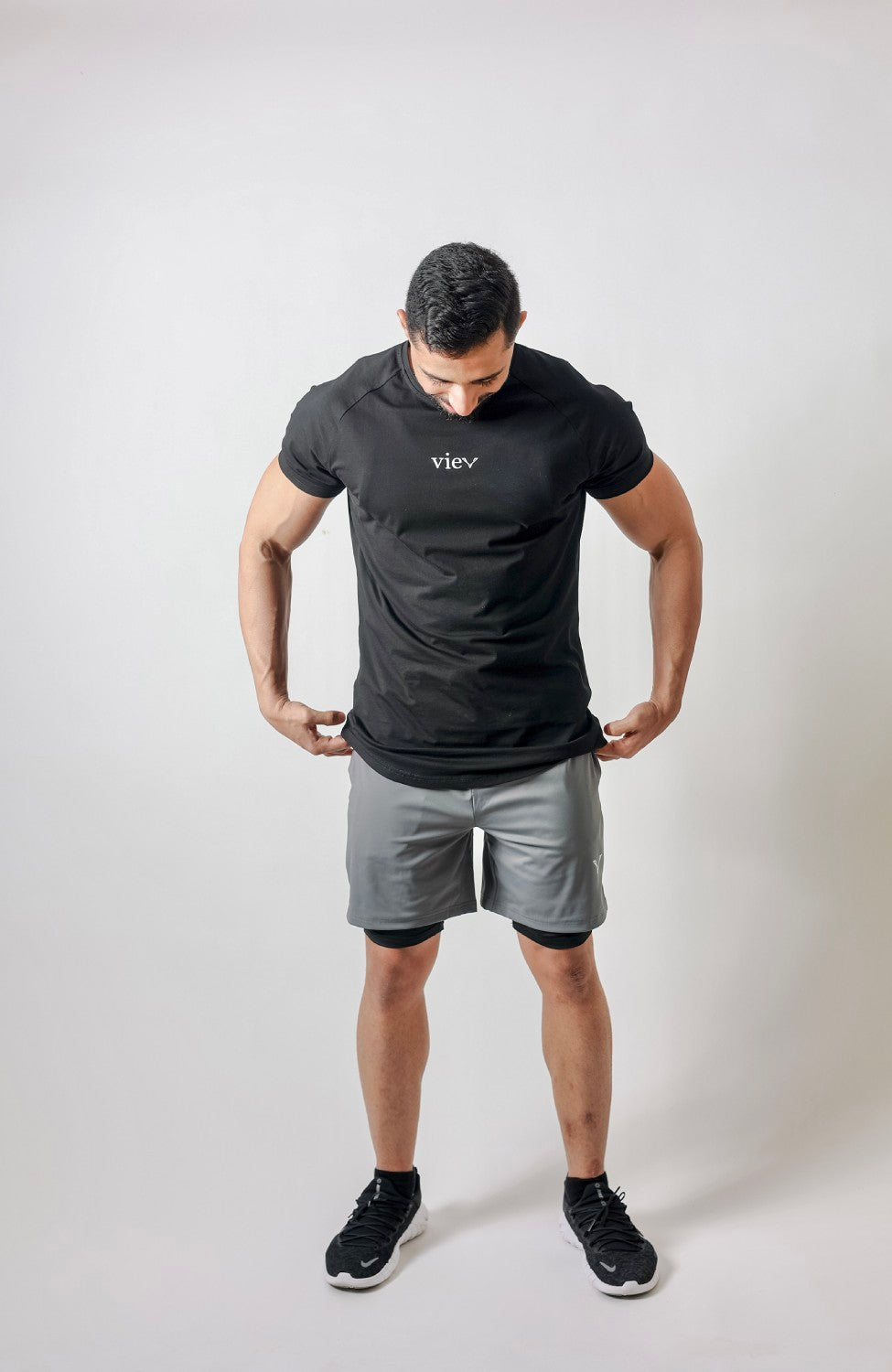
A closer athletic fit and a roomier fit can both be options. Choose the shape you feel comfortable wearing, while keeping loose clothing clear of moving equipment. Fabric features such as stretch or moisture management should be checked in the product information, not assumed from the shirt's appearance.
For more help, read our training T-shirt buying guide or compare current options in the Vie T-shirt collection.
Pick shorts or joggers based on your preferred coverage
Choose shorts if you prefer less leg coverage, or joggers if you prefer a full-length option. Neither choice makes you more or less ready for the gym. The important checks are comfort, freedom of movement and suitability for your surroundings.
Sit down, bend your knees and try a comfortable squat or lunge within your normal range. Notice whether the waistband slips, the fabric pulls across your thighs or you keep adjusting the hem. With lined shorts, check that the inner layer feels comfortable too.
Our joggers versus shorts guide explains the trade-offs. You can also browse the shorts collection and joggers collection to compare styles.
Choose footwear for the session, not just the outfit
Follow your gym's footwear rules and any guidance for the activity you have booked. Shoes should fit securely and feel comfortable with the socks you intend to wear. A shoe that looks sporty is not automatically suitable for every type of training.
If you are unsure what your session requires, ask the instructor before buying. Specialist footwear may be useful for particular activities, but you do not need to guess which features matter before you know what you will be doing.
Keep pockets, cords and accessories manageable
Empty hard or bulky objects from pockets before using equipment where they could press against you. Use your gym's storage arrangements for valuables rather than relying on a pocket simply because it has space.
Keep loose cords and fabric away from moving parts, and follow staff guidance about jewellery and accessories. If an item keeps catching or distracting you during your try-on, simplify the outfit before you arrive.
Do a quick outfit check at home
Try the complete outfit with your chosen footwear and underlayers. Move, sit and walk for a few minutes. Look for anything you need to keep repositioning, and check coverage in the positions you expect to use.
If you are buying something new, use the Vie size chart rather than relying only on a familiar size label. Our activewear measurement guide explains how body and garment measurements differ.
Pack for the visit without overcomplicating it
Check whether the facility asks you to bring a towel and whether you need a change of clothes for your plans afterwards. Bring what the session and venue require rather than filling a bag with equipment you have not been told to use.
After training, unpack damp clothing and follow each garment's care label. Our training-clothes care guide covers preparation, washing and drying without applying one rule to every fabric.
Let your first sessions guide future purchases
Start with what works, then notice what you actually need. You might prefer a different top shape, more coverage or another outfit between laundry days. Those observations are more useful than buying a large wardrobe before your first visit.
When you are ready to build a rotation, use our practical gym wardrobe guide to add pieces around your routine. Comfortable, suitable clothing is the goal, not looking like you have been training for years.

Leave a comment
This site is protected by hCaptcha and the hCaptcha Privacy Policy and Terms of Service apply.