

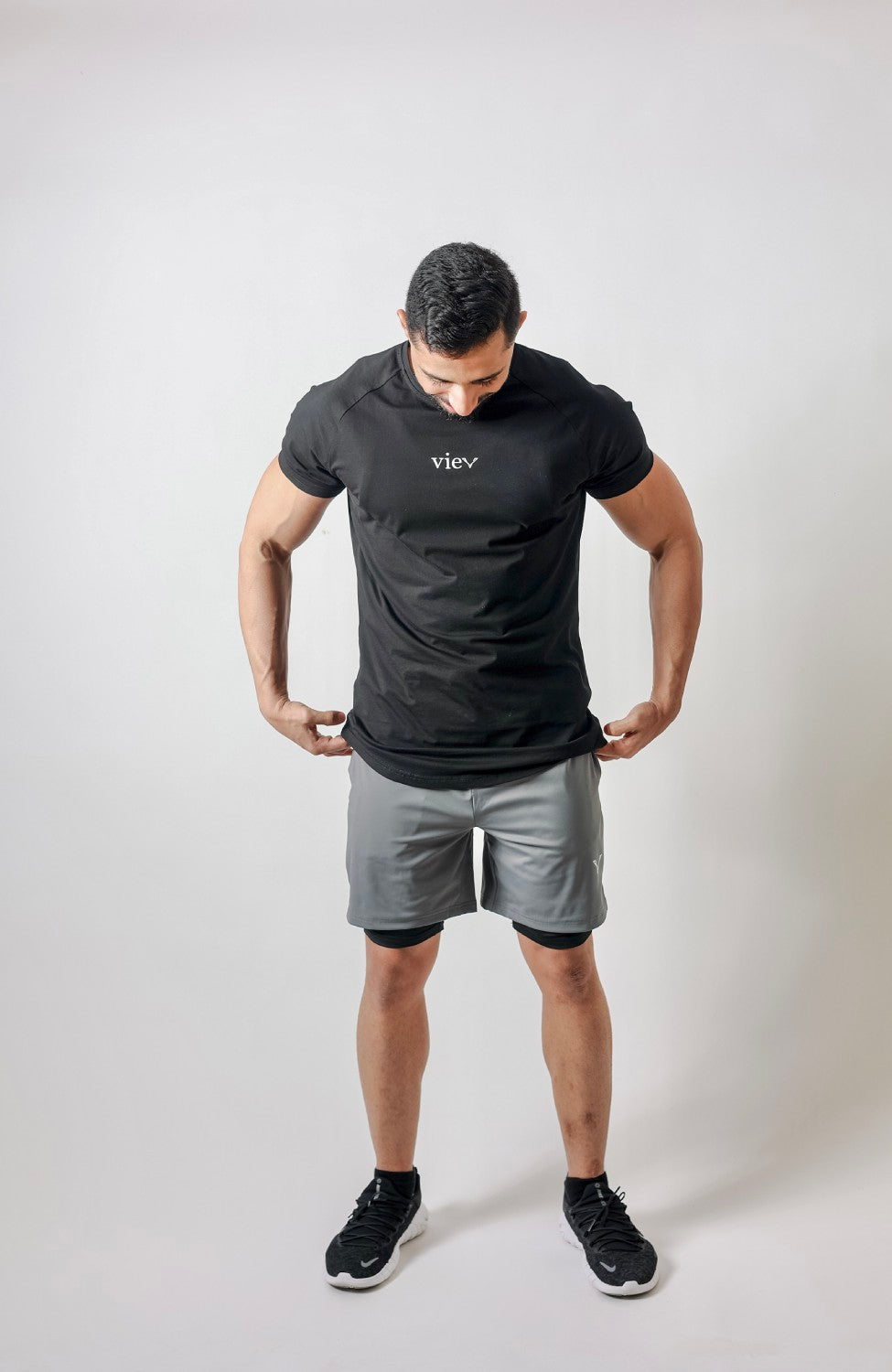
Build a practical gym wardrobe around the sessions you actually do, the clothes you already enjoy wearing and the time between laundry days. Start with one comfortable outfit, identify what is missing and add pieces that work with what you own. You do not need a different outfit for every exercise or a fixed number of garments to get started.
This guide helps you plan a small, useful rotation rather than buy a collection of items that rarely leave the drawer.
Start with your week, not a shopping list
Think about how often you train, where your sessions take place and when you can wash and dry your kit. Include time for clothing to dry according to its care label. Your rotation should reflect that routine rather than an arbitrary rule about how many tops or bottoms everyone needs.
For example, if you plan two sessions before your next laundry day, plan clean clothing for both. If you regularly add a third session, that may reveal a genuine gap. The same approach works whether you train occasionally or follow a busier schedule.
Check what you already own
Try on your current training clothes and separate the pieces you regularly choose from those you avoid. For each avoided item, identify the reason: an uncomfortable waistband, a restrictive shoulder, an unwanted length or care requirements that do not fit your routine.
Use those observations to guide your next purchase. Buying another version of a shape you dislike will not make your wardrobe more useful. If an existing garment still fits your needs, there is no reason to replace it simply to create a matching set.
Build around a comfortable top and bottom
Choose your preferred T-shirt shape
Start with a top that lets you reach forward and overhead without persistent pulling or adjustment. Choose a closer or roomier silhouette according to your preference, then check its fabric information and size guidance separately.
Our training T-shirt buying guide covers these checks. To compare available styles, browse the Vie T-shirt collection.
Choose bottoms for your setting and movements
Decide whether you prefer shorts, full-length joggers or a rotation that includes both. Test sitting, bending and movements from your usual sessions. You do not automatically need both categories if one already suits your activities and preferred coverage.
Use our joggers versus shorts comparison to narrow the choice, then compare the current options in the shorts collection or joggers collection.
Make new pieces work with existing ones
Before buying a top, consider which bottoms you would wear it with. Before buying bottoms, choose at least one top you already own that you like with them. This is a practical styling check, not a requirement to follow a particular colour palette.
If you enjoy simple combinations, repeat colours or shapes you already wear comfortably. If you prefer more variety, add it deliberately rather than buying a piece only because it looks appealing on its own.
Check the outfit with your usual footwear too. The length of joggers or the proportions of a roomy top can look and feel different as part of a complete outfit.
Plan layers and small essentials separately
Think about the full setup, including the socks and underlayers you prefer. With 2-in-1 shorts, assess the attached liner rather than assuming it will feel the same as your separate base layer. Our lined versus unlined shorts guide explains that decision.
Add an outer layer only if your journey, environment or personal preference calls for one. Clothing does not replace activity-specific protective equipment or appropriate footwear; follow the requirements of your sport and facility.
Make laundry part of the plan
A useful rotation needs to be manageable after training as well as during it. Check care requirements before buying, especially if you rely on a particular washing or drying method. Do not assume that every activewear item can share the same cycle.
Our training-clothes care guide explains a care-label-first routine. If your existing kit is frequently unavailable because it is still being washed or dried, an additional compatible outfit may be more useful than another specialist item.
Add pieces only when you can name the gap
After using your rotation, ask what would make the next week easier. That might be another top between laundry days, bottoms with your preferred coverage or a better-fitting replacement for an uncomfortable item.
Set a budget and prioritize that specific gap. Check the Vie size chart and read our activewear measurement guide before selecting a size. The goal is a wardrobe you use comfortably and repeatedly, not the largest possible collection.


Leave a comment
This site is protected by hCaptcha and the hCaptcha Privacy Policy and Terms of Service apply.